Gentamicin (Hodiamont 2017)
Source:vignettes/articles/Hodiamont_2017_gentamicin.Rmd
Hodiamont_2017_gentamicin.RmdModel and source
- Citation: Hodiamont CJ, Janssen JM, de Jong MD, Mathot RA, Juffermans NP, van Hest RM. (2017). Therapeutic Drug Monitoring of Gentamicin Peak Concentrations in Critically Ill Patients. Ther Drug Monit 39(5):522-530.
- Article: https://doi.org/10.1097/FTD.0000000000000432
mod_meta <- rxode2::rxode(readModelDb("Hodiamont_2017_gentamicin"))
#> ℹ parameter labels from comments will be replaced by 'label()'
mod_meta$description
#> [1] "Two-compartment population PK model of intravenous gentamicin in critically ill adult ICU patients (Hodiamont 2017) estimated without retained covariates, with correlated between-subject variability on CL and central volume V1, combined additive plus proportional residual error, and substantial inter-occasion variability on CL and V1 reported in the source (documented in the vignette assumptions, not encoded structurally)."
mod_meta$reference
#> [1] "Hodiamont CJ, Janssen JM, de Jong MD, Mathot RA, Juffermans NP, van Hest RM. Therapeutic Drug Monitoring of Gentamicin Peak Concentrations in Critically Ill Patients. Ther Drug Monit 2017;39(5):522-530. doi:10.1097/FTD.0000000000000432."
mod_meta$units
#> $time
#> [1] "h"
#>
#> $dosing
#> [1] "mg"
#>
#> $concentration
#> [1] "mg/L"
Population
Hodiamont 2017 developed a population PK model from 59 critically ill adults admitted to the mixed medical-surgical ICU of the Academic Medical Center in Amsterdam between May-June 2013 and April-June 2014 (Hodiamont 2017 Table 1). Demographics: 30 male and 29 female, mean age 60.9 +/- 17.2 years, mean total body weight 79.2 +/- 22.0 kg (IBW 71.4 +/- 11.6, ABW 74.6 +/- 13.0). Cockcroft-Gault creatinine clearance averaged 87.0 +/- 64.7 mL/min before the first dose and rose to 99.7 +/- 59.3 and 133.0 +/- 85.6 before the second and third doses respectively, indicating substantial within-patient variation in renal function. Patients received 130 gentamicin administrations over 62 treatment episodes (mean 2.1 +/- 1.9 administrations per episode); the protocol fixed the first dose at approximately 5 mg/kg total body weight (mean 5.1 +/- 1.1 mg/kg) delivered as a 30 min IV infusion. Four endocarditis episodes (3 mg/kg combined with a beta-lactam for synergy) were included in the PK fit but excluded from the paper’s primary target-attainment analysis. A total of 416 blood samples were collected across all episodes (44% routine TDM, 56% residual blood-gas waste material).
The same information is available programmatically via
readModelDb("Hodiamont_2017_gentamicin")$population.
Source trace
The per-parameter origin is recorded as an in-file comment next to
each ini() entry in
inst/modeldb/specificDrugs/Hodiamont_2017_gentamicin.R. The
table below collects them in one place for review.
| Equation / parameter | Value | Source location |
|---|---|---|
lcl (log CL) |
log(2.3) | Hodiamont 2017 Table 2, Final Model column |
lvc (log V1) |
log(21.6) | Hodiamont 2017 Table 2, Final Model column |
lq (log Q) |
log(1.3) | Hodiamont 2017 Table 2, Final Model column |
lvp (log V2) |
log(10.2) | Hodiamont 2017 Table 2, Final Model column |
| IIV CL | 75.0% CV -> omega^2 = log(1 + 0.75^2) = 0.446287 | Hodiamont 2017 Table 2, IIV CL |
| IIV V1 | 27.0% CV -> omega^2 = log(1 + 0.27^2) = 0.070365 | Hodiamont 2017 Table 2, IIV V1 |
| Cor(IIV CL, IIV V1) -> covariance | r = 0.21 -> 0.21 * sqrt(0.446287 * 0.070365) = 0.037214 | Hodiamont 2017 Table 2, “Correlation, r, between IIV CL and IIV V1” |
propSd (proportional residual SD) |
0.194 | Hodiamont 2017 Table 2, Residual variability (19.4%) |
addSd (additive residual SD) |
0.13 | Hodiamont 2017 Table 2, Residual variability (additive 0.13 mg/L) |
| Two-compartment IV PK ODE structure | n/a | Hodiamont 2017 Methods “PK Analysis”; Results “Model” (2-cmt superior to 1- and 3-cmt) |
| Combined additive + proportional residual error | n/a | Hodiamont 2017 Results “Model” |
| Body-weight covariates absent in final model | n/a | Hodiamont 2017 Results “Model” – TBW/IBW/ABW tested, no significant improvement |
Virtual cohort
The original observed concentrations are not publicly available. To mirror the simulation scenarios reported by Hodiamont 2017 (Results “Simulation of Cmax at Different Starting Doses”; Figure 5), the vignette draws virtual cohorts of identical 70 kg patients and gives each subject either a 5 mg/kg (350 mg) or a 6 mg/kg (420 mg) first dose infused over 30 minutes. The paper used 1000 subjects per arm; the vignette uses 300 per arm to keep the render time short while keeping Monte Carlo noise below ~3 percentage points on each target-attainment statistic.
set.seed(20260524)

n_subjects <- 300L
infusion_h <- 0.5   # 30 min infusion (Hodiamont 2017 Methods, "Patients")

# Hodiamont 2017 simulated identical 70 kg patients (Methods,
# "Simulation of Cmax at Different Starting Doses"). The library model
# carries no body-weight covariate, so WT is only used here to express
# the per-kg dose; it does not enter the model() equations.
regimens <- tibble::tribble(
  ~regimen,   ~dose_mg_per_kg,
  "5 mg/kg",  5,
  "6 mg/kg",  6
)

make_cohort <- function(n, regimen, dose_mg_per_kg, id_offset = 0L) {
  ids <- id_offset + seq_len(n)
  wt  <- rep(70, n)
  amt <- wt * dose_mg_per_kg

  dose_rows <- tibble::tibble(
    id      = ids,
    time    = 0,
    evid    = 1L,
    cmt     = "central",
    amt     = amt,
    rate    = amt / infusion_h,
    regimen = regimen
  )

  obs_grid <- c(seq(0, 2, by = 0.1), 2.5, 3, 4, 6, 8, 12, 18, 24)
  obs_rows <- tidyr::expand_grid(id = ids, time = obs_grid) |>
    dplyr::mutate(
      evid    = 0L,
      cmt     = "central",
      amt     = 0,
      rate    = 0,
      regimen = regimen
    )

  dplyr::bind_rows(dose_rows, obs_rows) |>
    dplyr::arrange(id, time, dplyr::desc(evid))
}

events <- dplyr::bind_rows(
  make_cohort(n_subjects, "5 mg/kg", 5, id_offset =    0L),
  make_cohort(n_subjects, "6 mg/kg", 6, id_offset = 1000L)
)

stopifnot(!anyDuplicated(unique(events[, c("id", "time", "evid")])))

cat(
  "Dose rows:", sum(events$evid == 1L),
  " | Obs rows:", sum(events$evid == 0L), "\n"
)
#> Dose rows: 600  | Obs rows: 17400
Simulation
mod <- readModelDb("Hodiamont_2017_gentamicin")
sim <- rxode2::rxSolve(
  mod,
  events = events,
  keep   = c("regimen")
) |>
  as.data.frame()
#> ℹ parameter labels from comments will be replaced by 'label()'
Replicate published figures
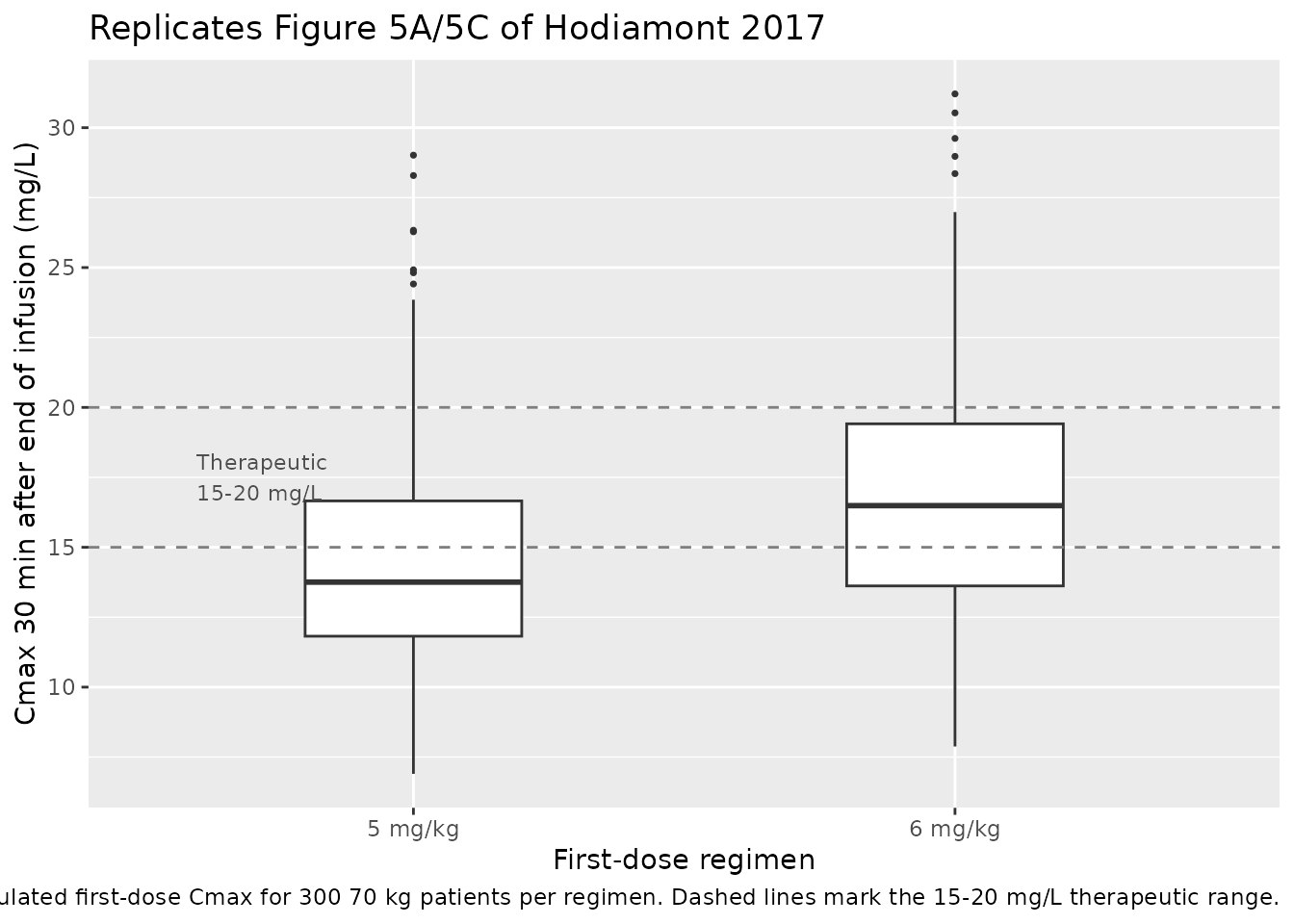
Figure 5 – simulated first-dose Cmax distributions
Hodiamont 2017 Figure 5A and 5C show boxplots of simulated first-dose gentamicin Cmax at 5 mg/kg and 6 mg/kg respectively (1000 patients per arm, body weight 70 kg). The published median Cmax was 14.0 mg/L at 5 mg/kg and 16.8 mg/L at 6 mg/kg. Cmax in the paper is defined as the serum concentration 30 minutes after the end of a 30 min infusion, i.e. at 1 hour after the start of the infusion (Methods, “Analysis of Gentamicin Cmax”).
cmax_at_1h <- sim |>
  dplyr::filter(abs(time - 1) < 1e-6) |>
  dplyr::select(id, regimen, Cmax = Cc)

ggplot(cmax_at_1h, aes(regimen, Cmax)) +
  geom_boxplot(width = 0.4, outlier.size = 0.6) +
  geom_hline(yintercept = c(15, 20), linetype = "dashed", colour = "grey50") +
  annotate("text", x = 0.6, y = 17.5, label = "Therapeutic\n15-20 mg/L",
           hjust = 0, size = 3, colour = "grey30") +
  labs(
    x       = "First-dose regimen",
    y       = "Cmax 30 min after end of infusion (mg/L)",
    title   = "Replicates Figure 5A/5C of Hodiamont 2017",
    caption = paste0(
      "Simulated first-dose Cmax for ", n_subjects,
      " 70 kg patients per regimen. Dashed lines mark the 15-20 mg/L therapeutic range."
    )
  )
PKNCA validation
Compute Cmax over the first dosing interval per subject with PKNCA.
Grouping is by regimen. (Hodiamont 2017 reports first-dose
Cmax only; there is no published AUC reference, but auclast
is included for completeness.)
sim_nca <- sim |>
  dplyr::filter(!is.na(Cc)) |>
  dplyr::select(id, time, Cc, regimen)

dose_df <- events |>
  dplyr::filter(evid == 1L) |>
  dplyr::select(id, time, amt, regimen)

conc_obj <- PKNCA::PKNCAconc(
  sim_nca, Cc ~ time | regimen + id,
  concu = "mg/L", timeu = "h"
)
dose_obj <- PKNCA::PKNCAdose(
  dose_df, amt ~ time | regimen + id,
  doseu = "mg"
)

intervals <- data.frame(
  start    = 0,
  end      = 24,
  cmax     = TRUE,
  tmax     = TRUE,
  auclast  = TRUE
)

nca_data <- PKNCA::PKNCAdata(conc_obj, dose_obj, intervals = intervals)
nca_res  <- PKNCA::pk.nca(nca_data)

res_tbl <- as.data.frame(nca_res$result)
Comparison against Hodiamont 2017 simulation summaries
Hodiamont 2017 reports, for each starting-dose scenario, the median Cmax and the percentage of patients whose Cmax falls within (%Cther: 15-20 mg/L), below (%Csubther: < 15 mg/L), and above (%Csuprather: > 20 mg/L) the therapeutic range. The chunk below recomputes those statistics from the simulated Cmax-at-1-hour values (matching the paper’s Cmax definition) and renders them side-by-side with the published values.
simulated <- cmax_at_1h |>
  dplyr::group_by(regimen) |>
  dplyr::summarise(
    median_Cmax_sim    = median(Cmax),
    pct_in_target_sim  = mean(Cmax >= 15 & Cmax <= 20) * 100,
    pct_subther_sim    = mean(Cmax <  15)              * 100,
    pct_suprather_sim  = mean(Cmax >  20)              * 100,
    .groups = "drop"
  )

published <- tibble::tribble(
  ~regimen,   ~median_Cmax_pub, ~pct_in_target_pub, ~pct_subther_pub, ~pct_suprather_pub,
  "5 mg/kg",  14.0,             27.7,                58.6,             13.7,
  "6 mg/kg",  16.8,             33.5,                35.6,             30.9
)

comparison <- published |>
  dplyr::left_join(simulated, by = "regimen") |>
  dplyr::select(regimen,
                median_Cmax_pub,    median_Cmax_sim,
                pct_in_target_pub,  pct_in_target_sim,
                pct_subther_pub,    pct_subther_sim,
                pct_suprather_pub,  pct_suprather_sim)

knitr::kable(
  comparison,
  digits  = 1,
  caption = paste("Comparison of simulated first-dose Cmax statistics with",
                  "Hodiamont 2017 Results 'Simulation of Cmax at Different",
                  "Starting Doses'. The 'pub' columns are the published values",
                  "(1000 patients per arm); the 'sim' columns come from the",
                  paste0("packaged model with n = ", n_subjects,
                         " 70 kg patients per arm."))
)| regimen | median_Cmax_pub | median_Cmax_sim | pct_in_target_pub | pct_in_target_sim | pct_subther_pub | pct_subther_sim | pct_suprather_pub | pct_suprather_sim |
|---|---|---|---|---|---|---|---|---|
| 5 mg/kg | 14.0 | 13.8 | 27.7 | 28.3 | 58.6 | 62.7 | 13.7 | 9.0 |
| 6 mg/kg | 16.8 | 16.5 | 33.5 | 42.7 | 35.6 | 35.7 | 30.9 | 21.7 |
The simulated median Cmax and target-attainment percentages should
track the published values within Monte Carlo noise (the paper used 1000
patients per arm versus 300 here). Sizeable IIV on V1 (27%) and on CL
(75%) drives the wide spread; the simulated medians sitting near the
centre of the published values is the primary check that the
typical-value structural parameters and the IIV omegas were translated
correctly. The PKNCA cmax value over the full 0-24 h dosing
interval is also available in res_tbl for users who prefer
the maximum-over- interval definition; that value will be similar but is
not identical to the published “30 min after end of infusion” Cmax used
in the Hodiamont paper.
Assumptions and deviations
-
Inter-occasion variability (IOV) not encoded.
Hodiamont 2017 estimated IOV on both CL (24.0% CV) and V1 (25.1% CV);
the IOV on V1 is in fact the paper’s central finding because it exceeded
the arbitrary 15% cutoff below which the authors considered routine TDM
effective. Following the precedent set by
Sikma_2020_tacrolimus*andTing_2014_tobramycin_inhaled, the packaged model omits the IOV terms because nlmixr2lib popPK extractions do not standardise IOV encoding (it requires an OCC variable in the dataset and a multiplexed per-occasion eta structure, cf.Wilkins_2008_rifampicinorVet_2016_midazolam). Population-level statistics from simulations of a single dose (such as the first-dose Cmax distributions replicated above) are unaffected because IOV only acts across occasions within a subject. Users simulating multi-dose scenarios and interested in repeat-administration Cmax variability should add the IOV layer manually; in the source paper this was the main driver of why TDM after the first dose had limited utility. -
Body-weight covariates absent. Hodiamont 2017
tested TBW, IBW, and ABW on CL, Q, V1, and V2 using both allometric
(with fixed exponents 0.75 / 1) and univariate forms and reported no
significant OFV improvement (Results, “Model”). The packaged model
therefore carries no covariate effects and
covariateDatais empty. Users applying this model to populations whose body-size distribution differs substantially from the source cohort (mean TBW 79 kg, range reported but not tabulated subject-by-subject) should interpret predictions with that limitation in mind. - Renal function, fluid balance, inotrope use not tested. The paper states explicitly that these covariates were not evaluated; the goal was to quantify the total IOV that arises in routine TDM where only body weight is normally considered. The packaged model inherits this scope.
- Endocarditis sub-cohort retained in fit. Four treatment episodes for endocarditis were dosed at 3 mg/kg in combination with a beta-lactam and were retained in the PK fit but excluded from the paper’s primary target-attainment analysis. The library model does not distinguish these episodes from the standard 5 mg/kg-protocol episodes.
-
Cmax definition. The paper’s Cmax is the
concentration 30 minutes after the end of a 30 minute infusion (i.e. at
1 hour after the start of dosing). The comparison table uses that
definition; the PKNCA
cmaxfield over 0-24 h is similar but not identical. -
Infusion duration set by the event table. The
source paper modelled a 30 minute IV infusion. The library model does
not hard-code
dur(central), so users specify infusion duration per dose via therate(ordur) column on the event-table dose rows; the vignette usesrate = amt / 0.5to deliver each dose over 30 minutes. - Errata not searched. An errata search on the publisher landing page was not performed for this 2017 article during extraction. If a subsequent erratum revises a Table 2 estimate, the packaged values should be refreshed accordingly.