Model and source
- Citation: Xu XS, Moreau P, Usmani SZ, Lonial S, Jakubowiak A, Oriol A, Krishnan A, Blade J, Luo M, Sun YN, Zhou H, Nnane I, Deraedt W, Qi M, Ukropec J, Clemens PL. Split First Dose Administration of Intravenous Daratumumab for the Treatment of Multiple Myeloma (MM): Clinical and Population Pharmacokinetic Analyses. Adv Ther. 2020;37(4):1464-1478. doi:10.1007/s12325-020-01247-8.
- Description: Two-compartment population PK model for intravenous daratumumab (anti-CD38 IgG1k) in adults with multiple myeloma, with parallel linear and Michaelis-Menten eliminations from the central compartment. The maximum velocity of the saturable (target-mediated) elimination decays mono-exponentially from its baseline value at first-order rate KDES, mimicking depletion of the CD38 target over weekly 16 mg/kg therapy (Xu 2020 MMY1001 D-Kd / D-KRd cohorts).
- Article: https://doi.org/10.1007/s12325-020-01247-8
- Supplement (Online Resources 1-6, including the final-model parameter table): https://doi.org/10.1007/s12325-020-01247-8 (electronic supplementary material).
The model is a two-compartment IV population PK structure with parallel linear and Michaelis-Menten eliminations from the central compartment. The maximum velocity of the saturable (target-mediated) elimination decays mono-exponentially from its baseline value at first-order rate KDES, mimicking depletion of the CD38 target over weekly 16 mg/kg therapy. The structural form follows the established daratumumab population-PK parameterisation; Xu 2020 re-fit the parameters using the MMY1001 D-Kd (n=85) and D-KRd (n=22) cohorts.
Population
The PK-evaluable population comprised 107 patients with multiple myeloma from the phase 1b MMY1001 study (ClinicalTrials.gov NCT01998971): the D-Kd cohort (daratumumab + carfilzomib + dexamethasone, n=85, relapsed/refractory MM with 1-3 prior lines of therapy) and the D-KRd cohort (daratumumab + carfilzomib + lenalidomide + dexamethasone, n=22, newly diagnosed MM). The D-Kd cohort was older (median 66 years, range 38-85) than the D-KRd cohort (median 60 years, range 34-74); sex was balanced (~54% male in both cohorts); the population was 80-86% White; median body weight was 70.0 kg (D-Kd) and 79.9 kg (D-KRd); ECOG performance status was 0 or 1 in approximately 92% of D-Kd and 95% of D-KRd patients (Xu 2020 Table 1).
All patients received 16 mg/kg IV daratumumab weekly for Cycles 1-2 (28-day cycles), every 2 weeks for Cycles 3-6, and every 4 weeks thereafter. The first dose was administered either as a single 16-mg/kg infusion on Cycle 1 Day 1 (D-Kd, n=10) or as two 8-mg/kg infusions on Cycle 1 Days 1 and 2 (D-Kd n=75, D-KRd n=22). The median durations of the first, second, and subsequent intravenous infusions of daratumumab in MMY1001 were 7.0, 4.3, and 3.4 h, respectively.
The same metadata is available programmatically via
readModelDb("Xu_2020_daratumumab")$population.
Source trace
The per-parameter origin is recorded as an in-file comment next to
each ini() entry in
inst/modeldb/specificDrugs/Xu_2020_daratumumab.R. The table
below collects the equation and parameter origins in one place.
| Equation / parameter | Value | Source location |
|---|---|---|
lcl (CL) |
0.00485 L/hour | Online Resource 6: CL, RSE 10% |
lvc (V1) |
4.09 L | Online Resource 6: V1, RSE 3.5% |
lq (Q) |
0.0642 L/hour | Online Resource 6: Q, RSE 8.0% |
lvp (V2) |
3.06 L | Online Resource 6: V2, RSE 9.7% |
lvmax (Vmax baseline) |
2.08 mg/hour | Online Resource 6: Vmax, RSE 16.7% |
lkdes (1st-order Vmax decay) |
0.0013 1/hour | Online Resource 6: KDES, RSE 17.8% |
lkm (Km, fixed) |
0.93 ug/mL | Online Resource 6: KM, fixed |
e_wt_cl |
0.451 | Online Resource 6: WT on CL, RSE 50.1% |
e_alb_cl |
-1.149 | Online Resource 6: serum albumin on CL, RSE 27.2% |
e_igg_cl |
0.806 | Online Resource 6: Type of MM (IgG vs non-IgG) on CL, RSE 29.8% |
e_wt_vc |
0.375 | Online Resource 6: WT on V1, RSE 38.1% |
e_sexf_vc |
-0.205 | Online Resource 6: Sex on V1, RSE 22.2% |
| omega(CL) | 40.7% CV | Online Resource 6, RSE 10.4% |
| omega(V1) | 21.8% CV | Online Resource 6, RSE 10.3% |
| omega(Vmax) | 71.3% CV | Online Resource 6, RSE 23.8% |
| omega(KDES) | 43.4% CV | Online Resource 6, RSE 45.6% |
| Residual error (proportional) | 13.8% CV | Online Resource 6: additive on log-scale |
d/dt(central), d/dt(peripheral1)
|
n/a | Main text Methods (Population PK Analysis) + Online Resource 6 footnote equations |
| TVCL = 0.00485 * (WT/78.6)^0.451 * (ALB/37.0)^-1.149 * TPMMCL | n/a | Online Resource 6 footnote |
| TVV1 = 4.09 * (WT/78.6)^0.375 * SEXV1 | n/a | Online Resource 6 footnote |
| Reference WT, ALB | 78.6 kg, 37.0 g/L | Online Resource 6 footnote |
Virtual cohort
Individual MMY1001 patient covariate values are not publicly available. The virtual cohort below approximates the published Cohort demographics in Xu 2020 Table 1: ~46% female, ~80% White, median body weight 78.6 kg (consistent with the model’s reference weight), median baseline albumin 37 g/L (model reference). Approximately 60% of patients with multiple myeloma have IgG-secreting disease in published RRMM cohorts (Fau 2020 Table S2 reports 55% IgG MM); we use 55% IgG MM here so the simulation reflects a clinically typical mix.
set.seed(20260514L)

n_per_arm <- 60L  # downsampled from 100 for vignette build budget; mean/median trajectories visually identical

make_cohort <- function(n, regimen, dose_schedule, id_offset = 0L) {
  ids <- id_offset + seq_len(n)

  cov_df <- tibble(
    id      = ids,
    # Median 72 kg approximates the pooled D-Kd / D-KRd median across cohorts
    # (D-Kd 70.0 kg; D-KRd 79.9 kg), with a clipped SD of 15 kg spanning the
    # full Xu 2020 Table 1 range of 45-160.8 kg.
    WT      = pmax(45, pmin(160, rnorm(n, mean = 72, sd = 15))),
    ALB     = pmax(25, pmin(50,  rnorm(n, mean = 37, sd = 4))),
    SEXF    = as.integer(runif(n) < 0.458),
    # 55% IgG MM => MM_NIGG = 0; 45% non-IgG MM => MM_NIGG = 1.
    MM_NIGG = as.integer(runif(n) > 0.55),
    regimen = regimen
  )

  dose_df <- dose_schedule(ids) |>
    left_join(cov_df, by = "id") |>
    mutate(amt = 16 * WT * dose_fraction)

  obs_grid <- tidyr::expand_grid(
    id   = ids,
    # 6-hourly through the weekly dosing phase, 12-hourly to end of follow-up.
    time = sort(unique(c(seq(0, 8 * 7 * 24, by = 6),
                         seq(8 * 7 * 24, 28 * 7 * 24, by = 12))))
  ) |>
    left_join(cov_df, by = "id") |>
    mutate(evid = 0L, amt = 0, cmt = "central", dur = 0)

  dose_rows <- dose_df |>
    transmute(id, time, amt, evid = 1L, cmt = "central", dur,
              WT, ALB, SEXF, MM_NIGG, regimen)

  bind_rows(dose_rows, obs_grid |> select(names(dose_rows))) |>
    arrange(id, time, desc(evid))
}

# MMY1001 calendar: 28-day cycles. Weekly dosing during Cycles 1-2 (days 0,
# 7, 14, 21, 28, 35, 42, 49); every 2 weeks during Cycles 3-6 (days 56, 70,
# 84, 98, 112, 126, 140, 154); every 4 weeks thereafter.

# Single first dose regimen: 16 mg/kg infusion on C1D1 (7h),
# then weekly for Cycles 1-2 (4.3h second infusion, 3.4h thereafter),
# Q2W for Cycles 3-6, Q4W after.
single_schedule <- function(ids) {
  qw_times  <- (0:7) * 7 * 24                  # days 0, 7, ..., 49 (Cycles 1-2)
  q2w_times <- 56 * 24 + 14 * 24 * (0:7)       # days 56, 70, ..., 154 (Cycles 3-6)
  q4w_times <- max(q2w_times) + 28 * 24 * (1:6)
  all_times <- c(qw_times, q2w_times, q4w_times)
  durations <- c(7.0,                          # first infusion
                 4.3,                          # second infusion
                 rep(3.4, length(all_times) - 2L))
  tidyr::expand_grid(id = ids, time_idx = seq_along(all_times)) |>
    mutate(time = all_times[time_idx],
           dur  = durations[time_idx],
           dose_fraction = 1) |>
    select(-time_idx)
}

# Split first dose regimen: 8 mg/kg on C1D1 (7h) and C1D2 (4.3h),
# then 16 mg/kg weekly through C2D last dose, then Q2W, then Q4W.
split_schedule <- function(ids) {
  qw_times  <- c(0, 24, (1:7) * 7 * 24)        # split first + days 7-49
  q2w_times <- 56 * 24 + 14 * 24 * (0:7)
  q4w_times <- max(q2w_times) + 28 * 24 * (1:6)
  all_times <- c(qw_times, q2w_times, q4w_times)
  doses     <- c(0.5, 0.5, rep(1, length(all_times) - 2L))
  durations <- c(7.0, 4.3, rep(3.4, length(all_times) - 2L))
  tidyr::expand_grid(id = ids, time_idx = seq_along(all_times)) |>
    mutate(time = all_times[time_idx],
           dur  = durations[time_idx],
           dose_fraction = doses[time_idx]) |>
    select(-time_idx)
}

events <- bind_rows(
  make_cohort(n_per_arm, "Single first dose", single_schedule, id_offset = 0L),
  make_cohort(n_per_arm, "Split first dose",  split_schedule,  id_offset = n_per_arm)
)
stopifnot(!anyDuplicated(unique(events[, c("id", "time", "evid")])))
Simulation
mod <- readModelDb("Xu_2020_daratumumab")

sim <- rxode2::rxSolve(
  mod,
  events = events,
  keep   = c("regimen", "WT", "ALB", "SEXF", "MM_NIGG"),
  addDosing = FALSE
) |> as.data.frame()
#> ℹ parameter labels from comments will be replaced by 'label()'
For deterministic typical-value replications (no between-subject variability), zero out the random effects:
mod_typ <- mod |> rxode2::zeroRe()
#> ℹ parameter labels from comments will be replaced by 'label()'
typ_events <- events |> filter(id %in% c(1L, n_per_arm + 1L))
sim_typ <- rxode2::rxSolve(mod_typ, events = typ_events,
                           keep = c("regimen", "WT", "ALB", "SEXF", "MM_NIGG")) |>
  as.data.frame()
#> ℹ omega/sigma items treated as zero: 'etalcl', 'etalvc', 'etalvmax', 'etalkdes'
#> Warning: multi-subject simulation without without 'omega'
Replicate published figures
Figure 1 – mean daratumumab serum concentrations
The published Figure 1 compares mean (+/- SD) daratumumab serum concentrations between the single first dose and split first dose cohorts of MMY1001 during the first 4 cycles of therapy. Below is the simulated analogue using the virtual cohort.
fig1_window_hr <- 16 * 7 * 24      # 16 weeks (~ Cycles 1-4 of 28-day cycles)

sim_fig1 <- sim |>
  filter(time <= fig1_window_hr, !is.na(Cc))

sim_fig1 |>
  group_by(regimen, time) |>
  summarise(
    Cc_mean = mean(Cc),
    Cc_sd   = sd(Cc),
    .groups = "drop"
  ) |>
  ggplot(aes(time / 24, Cc_mean, colour = regimen, fill = regimen)) +
  geom_ribbon(aes(ymin = pmax(0, Cc_mean - Cc_sd), ymax = Cc_mean + Cc_sd),
              alpha = 0.15, colour = NA) +
  geom_line(linewidth = 0.8) +
  labs(x = "Time (days)", y = "Daratumumab serum concentration (ug/mL)",
       colour = NULL, fill = NULL,
       title = "Simulated mean (+/- SD) serum concentrations through Cycle 3",
       caption = "Replicates Figure 1 of Xu 2020.")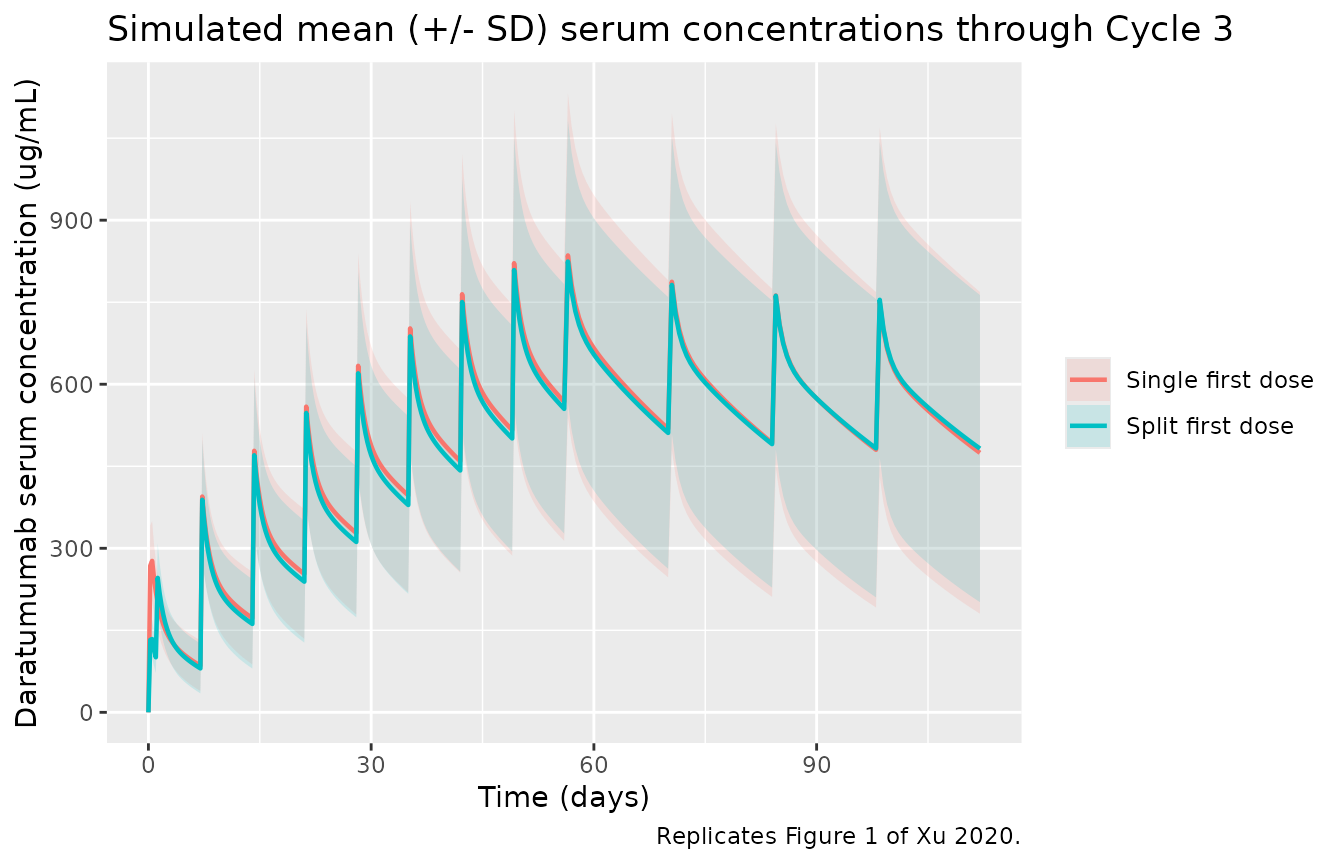
Figure 2b – difference between regimens during the first 2 weeks
Xu 2020 Figure 2b zooms into the first 2 weeks where the split- and single-first dose regimens differ. After the second split-dose infusion on Cycle 1 Day 2, the two regimens converge.
sim |>
  filter(time <= 14 * 24, !is.na(Cc)) |>
  group_by(regimen, time) |>
  summarise(
    Cc_p50 = median(Cc),
    Cc_p025 = quantile(Cc, 0.025),
    Cc_p975 = quantile(Cc, 0.975),
    .groups = "drop"
  ) |>
  ggplot(aes(time / 24, Cc_p50, colour = regimen, fill = regimen)) +
  geom_ribbon(aes(ymin = Cc_p025, ymax = Cc_p975), alpha = 0.15, colour = NA) +
  geom_line(linewidth = 0.8) +
  labs(x = "Time (days)", y = "Daratumumab serum concentration (ug/mL)",
       colour = NULL, fill = NULL,
       title = "First 2 weeks: split vs single first dose regimen",
       caption = "Replicates Figure 2b of Xu 2020.")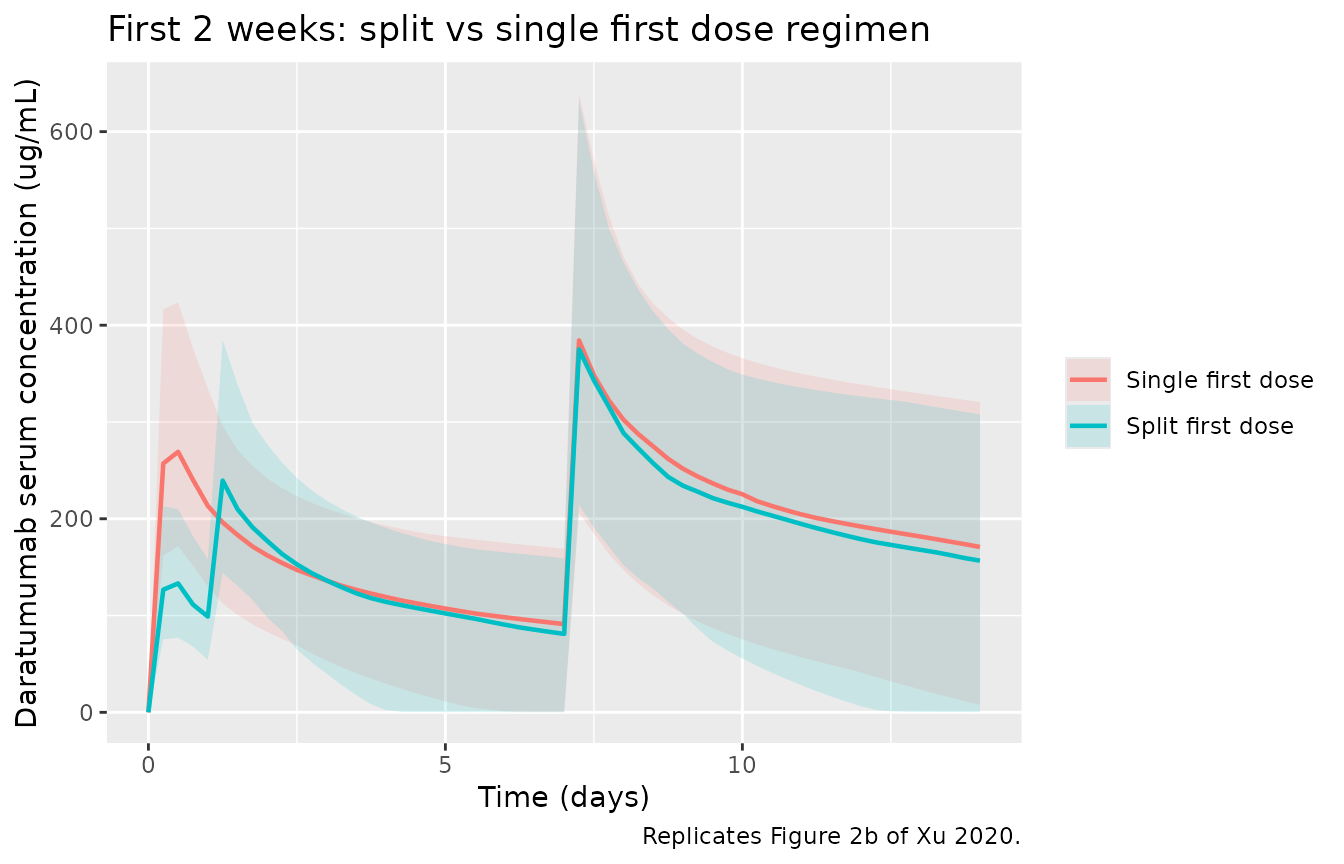
Figure 3 – percent difference in concentration converges to <1%
Xu 2020 Figure 3 reports that the percent difference between the simulated single- and split-dose concentrations falls below 1% for most patients by Week 4. The simulated percent difference is computed below using the regimen-mean trajectories.
pct_diff <- sim |>
  filter(!is.na(Cc), time <= 28 * 24) |>
  group_by(regimen, time) |>
  summarise(Cc_mean = mean(Cc), .groups = "drop") |>
  pivot_wider(names_from = regimen, values_from = Cc_mean) |>
  mutate(pct = 100 * (`Single first dose` - `Split first dose`) /
                pmax(`Single first dose`, 1e-3))

ggplot(pct_diff, aes(time / 24, pct)) +
  geom_hline(yintercept = 0, linetype = 2) +
  geom_line() +
  labs(x = "Time (days)", y = "% difference in Cc (single - split) / single",
       title = "Mean percent difference between single- and split-dose regimens",
       caption = "Replicates the qualitative pattern of Figure 3 of Xu 2020 (mean curves rather than per-subject boxplots).")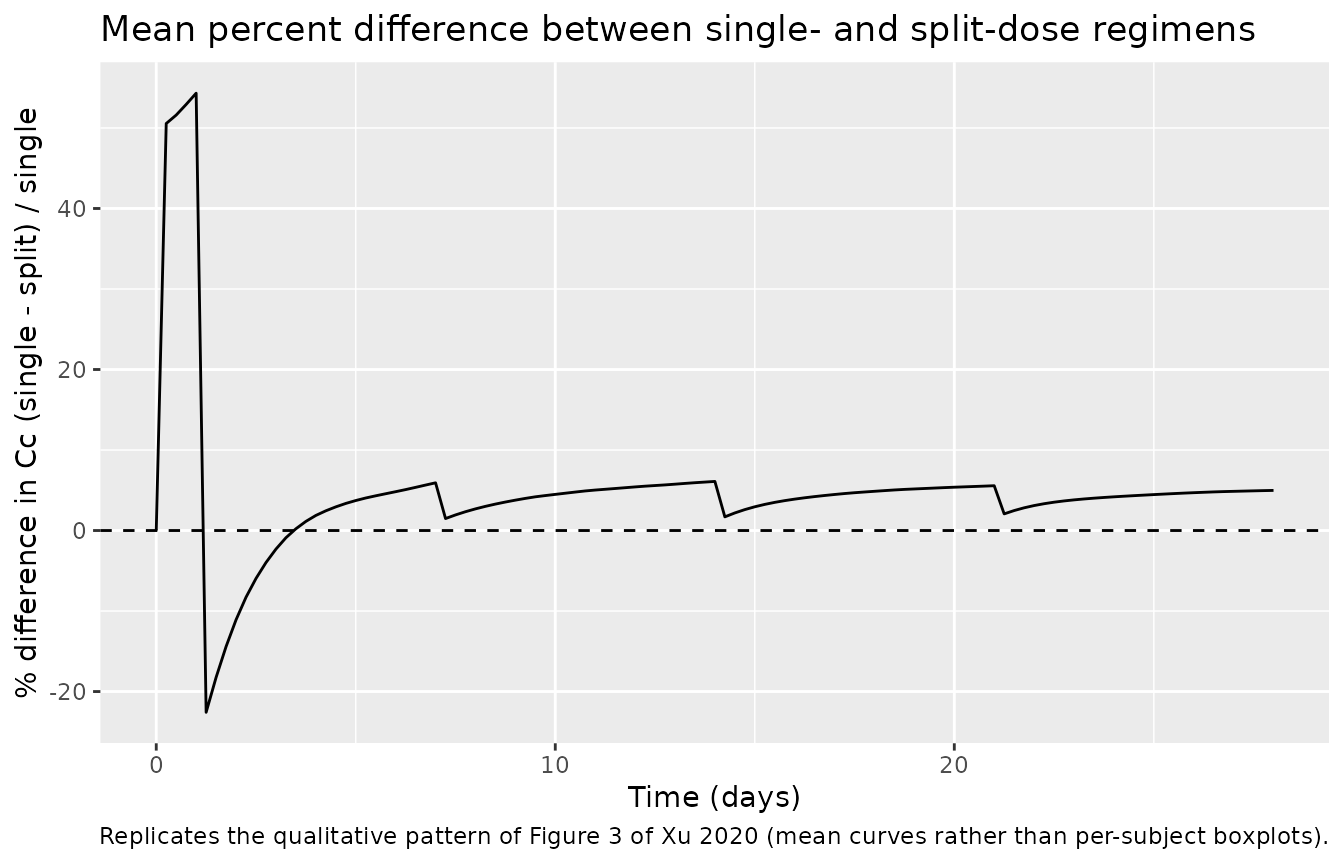
PKNCA validation
Daratumumab is administered as multiple-hour IV infusions; PKNCA AUC and Cmax are reported here for the first dose interval (single 16 mg/kg infusion on Cycle 1 Day 1) of the single-first-dose regimen, where the parallel-elimination behaviour and target-mediated saturation are most informative.
sim_first_cycle <- sim |>
  filter(regimen == "Single first dose", !is.na(Cc), time <= 7 * 24) |>
  select(id, time, Cc, regimen)

dose_first_cycle <- events |>
  filter(regimen == "Single first dose", evid == 1, time == 0) |>
  select(id, time, amt, regimen)

conc_obj <- PKNCA::PKNCAconc(
  sim_first_cycle,
  Cc ~ time | regimen + id,
  concu = "ug/mL", timeu = "hour"
)

dose_obj <- PKNCA::PKNCAdose(
  dose_first_cycle,
  amt ~ time | regimen + id,
  doseu = "mg"
)

intervals <- data.frame(
  start    = 0,
  end      = 7 * 24,
  cmax     = TRUE,
  tmax     = TRUE,
  auclast  = TRUE,
  cmin     = TRUE
)

nca_res <- PKNCA::pk.nca(PKNCA::PKNCAdata(conc_obj, dose_obj, intervals = intervals))
nca_tbl <- as.data.frame(nca_res$result)

knitr::kable(
  nca_tbl |>
    group_by(PPTESTCD) |>
    summarise(
      median = median(PPORRES, na.rm = TRUE),
      Q05    = quantile(PPORRES, 0.05, na.rm = TRUE),
      Q95    = quantile(PPORRES, 0.95, na.rm = TRUE),
      .groups = "drop"
    ),
  digits = 3,
  caption = "Simulated NCA parameters on the first 7-day dose interval (Single first dose regimen, 16 mg/kg)."
)| PPTESTCD | median | Q05 | Q95 |
|---|---|---|---|
| auclast | 24968.569 | 15342.458 | 35637.369 |
| cmax | 260.337 | 177.223 | 403.709 |
| cmin | 0.000 | 0.000 | 0.000 |
| tmax | 12.000 | 6.000 | 12.000 |
Comparison against published concentrations
Xu 2020 Table 2 reports observed median (range) postinfusion concentrations in MMY1001. The simulated medians from the virtual cohort are tabulated below for the same sampling time points.
# MMY1001 calendar (28-day cycles): C1D1 = day 0; C1D2 = day 1; C2D1 = day 28;
# C3D1 = day 56; C4D1 = day 84.
pub <- tibble::tribble(
  ~timepoint,            ~time_hr,         ~regimen,             ~pub_median, ~pub_low, ~pub_high,
  "C1D1 postinfusion",     7.0,            "Single first dose",  319.2,       237.5,    394.7,
  "C1D1 postinfusion",     7.0,            "Split first dose",   156.7,        82.5,    345.0,
  "C1D2 postinfusion",    24 + 4.3,        "Split first dose",   256.8,       125.8,    435.5,
  "C2D1 postinfusion",    28 * 24 + 3.4,   "Single first dose",  726.6,       523.1,    911.6,
  "C2D1 postinfusion",    28 * 24 + 3.4,   "Split first dose",   688.9,         0.0,   1202.4,
  "C3D1 preinfusion",     56 * 24 - 0.1,   "Single first dose",  463.2,       355.9,    792.9,
  "C3D1 preinfusion",     56 * 24 - 0.1,   "Split first dose",   639.2,        57.7,   1110.7,
  "C4D1 preinfusion",     84 * 24 - 0.1,   "Single first dose",  509.1,       291.2,    743.5,
  "C4D1 preinfusion",     84 * 24 - 0.1,   "Split first dose",   523.0,        92.3,   1019.3
)

approx_id <- function(df, target_hr) {
  df |>
    group_by(id, regimen) |>
    arrange(time) |>
    summarise(Cc = approx(time, Cc, xout = target_hr, rule = 2)$y, .groups = "drop")
}

sim_summary <- pub |>
  rowwise() |>
  mutate(sim_df = list(approx_id(sim |> filter(regimen == .env$regimen), time_hr))) |>
  ungroup() |>
  mutate(
    sim_median = vapply(sim_df, function(d) median(d$Cc, na.rm = TRUE), numeric(1)),
    sim_low    = vapply(sim_df, function(d) quantile(d$Cc, 0.05, na.rm = TRUE), numeric(1)),
    sim_high   = vapply(sim_df, function(d) quantile(d$Cc, 0.95, na.rm = TRUE), numeric(1))
  ) |>
  select(-sim_df) |>
  mutate(pct_diff = 100 * (sim_median - pub_median) / pub_median)

knitr::kable(
  sim_summary,
  digits = 1,
  caption = "Published (Xu 2020 Table 2) vs simulated median daratumumab concentrations at key MMY1001 sampling time points. The simulation uses a virtual cohort (n = 60 per arm) and is not expected to match patient-by-patient; the published medians are over small per-arm cohorts (D-Kd single dose n = 8-10; split-dose cohorts n = 14-75). Differences within +/- 30 percent indicate the structural model is reproducing the published exposure pattern; the C2D1 postinfusion peak is the most volatile point because it is most sensitive to body weight and to the timing of the second infusion."
)| timepoint | time_hr | regimen | pub_median | pub_low | pub_high | sim_median | sim_low | sim_high | pct_diff |
|---|---|---|---|---|---|---|---|---|---|
| C1D1 postinfusion | 7.0 | Single first dose | 319.2 | 237.5 | 394.7 | 253.8 | 171.3 | 399.1 | -20.5 |
| C1D1 postinfusion | 7.0 | Split first dose | 156.7 | 82.5 | 345.0 | 131.3 | 70.8 | 174.1 | -16.2 |
| C1D2 postinfusion | 28.3 | Split first dose | 256.8 | 125.8 | 435.5 | 200.3 | 113.4 | 274.7 | -22.0 |
| C2D1 postinfusion | 675.4 | Single first dose | 726.6 | 523.1 | 911.6 | 520.0 | 313.5 | 829.5 | -28.4 |
| C2D1 postinfusion | 675.4 | Split first dose | 688.9 | 0.0 | 1202.4 | 467.0 | 306.7 | 770.1 | -32.2 |
| C3D1 preinfusion | 1343.9 | Single first dose | 463.2 | 355.9 | 792.9 | 574.4 | 278.0 | 1061.7 | 24.0 |
| C3D1 preinfusion | 1343.9 | Split first dose | 639.2 | 57.7 | 1110.7 | 588.5 | 365.9 | 994.0 | -7.9 |
| C4D1 preinfusion | 2015.9 | Single first dose | 509.1 | 291.2 | 743.5 | 521.4 | 162.8 | 982.0 | 2.4 |
| C4D1 preinfusion | 2015.9 | Split first dose | 523.0 | 92.3 | 1019.3 | 482.6 | 249.5 | 987.8 | -7.7 |
Assumptions and deviations
- Virtual cohort. Individual patient covariates from the MMY1001 PK-evaluable population are not publicly available. The cohort above draws WT N(72, 15) kg and ALB N(37, 4) g/L, ~46% female, and 55% IgG MM / 45% non-IgG MM. These distributions are consistent with Xu 2020 Table 1 (D-Kd median 70.0 kg; D-KRd median 79.9 kg) and Fau 2020 Table S2 but are not the actual MMY1001 patients.
- Infusion duration. Xu 2020 reports median durations of 7.0 h (first infusion), 4.3 h (second), and 3.4 h (subsequent). The vignette uses those three values; in practice the durations varied between patients and across cycles.
- Time-varying Vmax equation. The supplement defines KDES as the “first-order rate for decrease of Vmax”. This is the only mathematically natural reading of “first-order rate of decrease,” and we encode it as Vmax(t) = Vmax(0) * exp(-KDES * t). The paper credits the structural form to a referenced prior publication (Xu 2020 Methods, reference 25) which was not available when this model was built; the parameter values used here are exclusively from Xu 2020 Online Resource 6.
-
Residual error. Xu 2020 reports “Additive error
term on the log-scale 13.8% CV”. An additive error on the
log-transformed observation in NONMEM is equivalent to a proportional
error in linear space; we encode it as
propSd = 0.138. - Albumin units. The Online Resource 6 footnote uses ALB reference 37.0 without an explicit unit. A value of 37 is consistent with g/L (typical adult median 35-50 g/L); g/dL would yield a reference of ~3.7. The model records ALB in g/L.
-
MM_NIGG reference orientation. The canonical
MM_NIGGcovariate (inst/references/covariate-columns.md) takes 1 = non-IgG MM and 0 = IgG MM, with a recommended reference category of 0 (IgG MM). Xu 2020 parameterises the linear-CL effect with non-IgG MM as the reference and IgG MM as the 80.6% additive shift. The model preserves the canonical column semantics and applies the shift as(1 + e_igg_cl * (1 - MM_NIGG)), faithful to the paper’s Online Resource 6 footnote equationTPMMCL = 1 (non-IgG) or 1+0.806 (IgG). -
Errata. No erratum or correction notice was
located; the sources consulted comprise the main PMC XML plus the docx
supplement. If a later correction adjusts an Online Resource 6 value,
the affected
ini()entry should be updated and the citation extended.